Check out what you’ve missed so far and learn more about ways to attend this year’s national conference
The benefits of including more individuals with disabilities in the workforce are numerous, including higher workplace morale, a more inclusive workplace culture, improved operational performance, productivity, creativity, and profitability, and a reduction in turnover, among many other benefits. The message from the speakers at the session, “The Effects of COVID-19 on Transitional Age Youth and Young Adults with Disabilities” as part of the CSG 2020 National Conference Reimagined, was simple: It is important that we engage youth and young adults with disabilities in the workforce early to help them build the meaningful and fulfilling careers they desire.
States play a critical role in ensuring these students and young adults are not left behind during the pandemic, and the CSG CAPE-Youth Center — The Center for Advancing Policy on Employment for Youth — seeks to assist states in these endeavors. The major goal of CAPE-Youth is to improve employment outcomes for youth and young adults with disabilities. Similar to all workforce aspects this year, the COVID-19 pandemic has had an effect on these transitional age youth and young adults.
While youth with disabilities are not inherently at higher risk for contracting COVID-19, youth and young adults with disabilities may be disproportionately affected by the disruption of services, including receiving appropriate special education, related services, and accommodations, amongst other programs and services. After a national policy scan, our CAPE-Youth team discovered some states are implementing assistive technology, distance learning, family engagement, individualized education programs, mental health resources, telehealth and transition services to assist youth in their transition during the pandemic. After running a poll for attendees, 35% of respondents said they are most interested in learning about transition services.
Speaker Erin Wilder, program manager for Transition and Pre-ETS in Texas, spoke to attendees about virtual employment fairs to connect transitional youth to work-based learning opportunities. These fairs allow youths virtual access to face time with staff and employers. Jason Vaden, deputy division director of Vocational Rehab Program Policy and Support in Texas chimed in, emphasizing the value of programs like this to work with partners in assisting youths with building careers, not just temporary jobs.
“Even when COVID-19 is no longer a big concern, we’re keeping these options in mind to make sure we are being accessible to students across the state,” Wilder said.
To view this session, visit: https://web.csg.org/2020/event/the-effect-of-covid-19-on-transition-age-youth-and-young-adults-with-disabilities/
Quotes from the CSG National Conference Reimagined
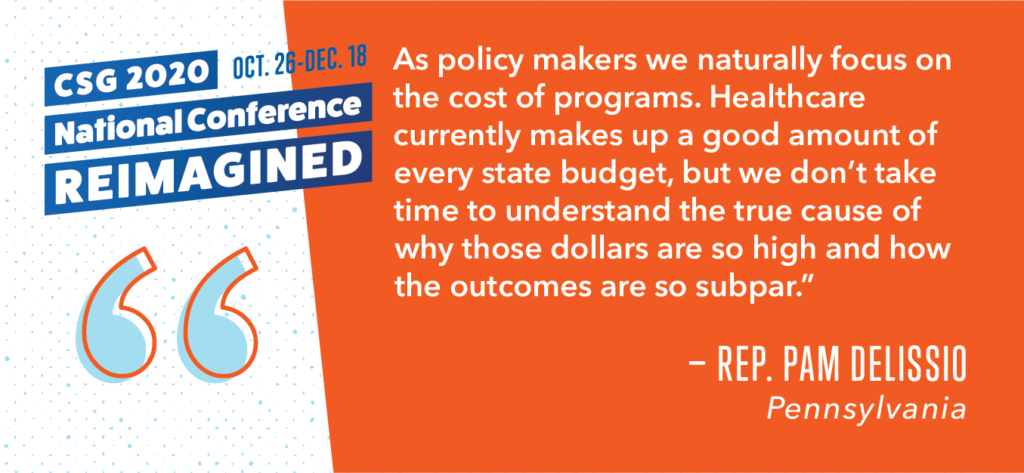
State Approaches to Reducing Health Disparities
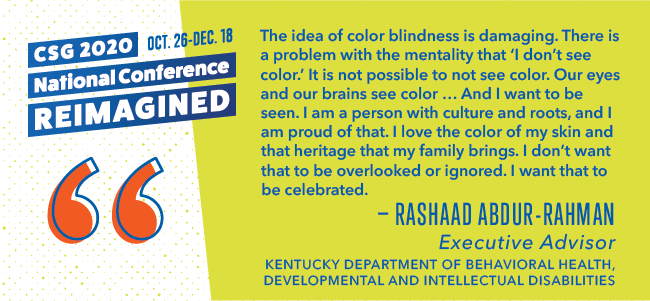
Language Matters: How Words Shape Our View
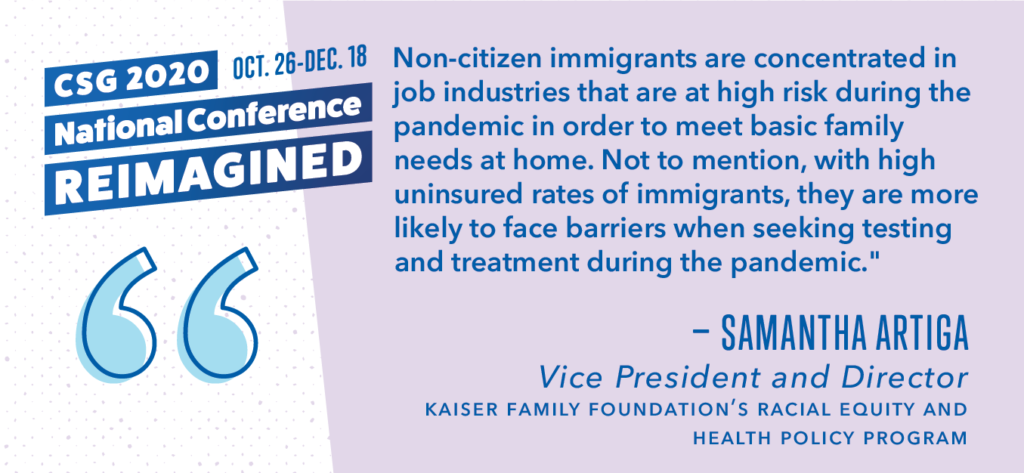
Inclusive COVID-19 Relief: Impacts on Immigrant Communities and State-Level Responses